
About The Author
McLaren has named its next series supercar and shown us nothing of it except a bird in fancy dress. McL 820 arrives in 2027, and the number in the name is the part worth studying.
A kiwi in disguise
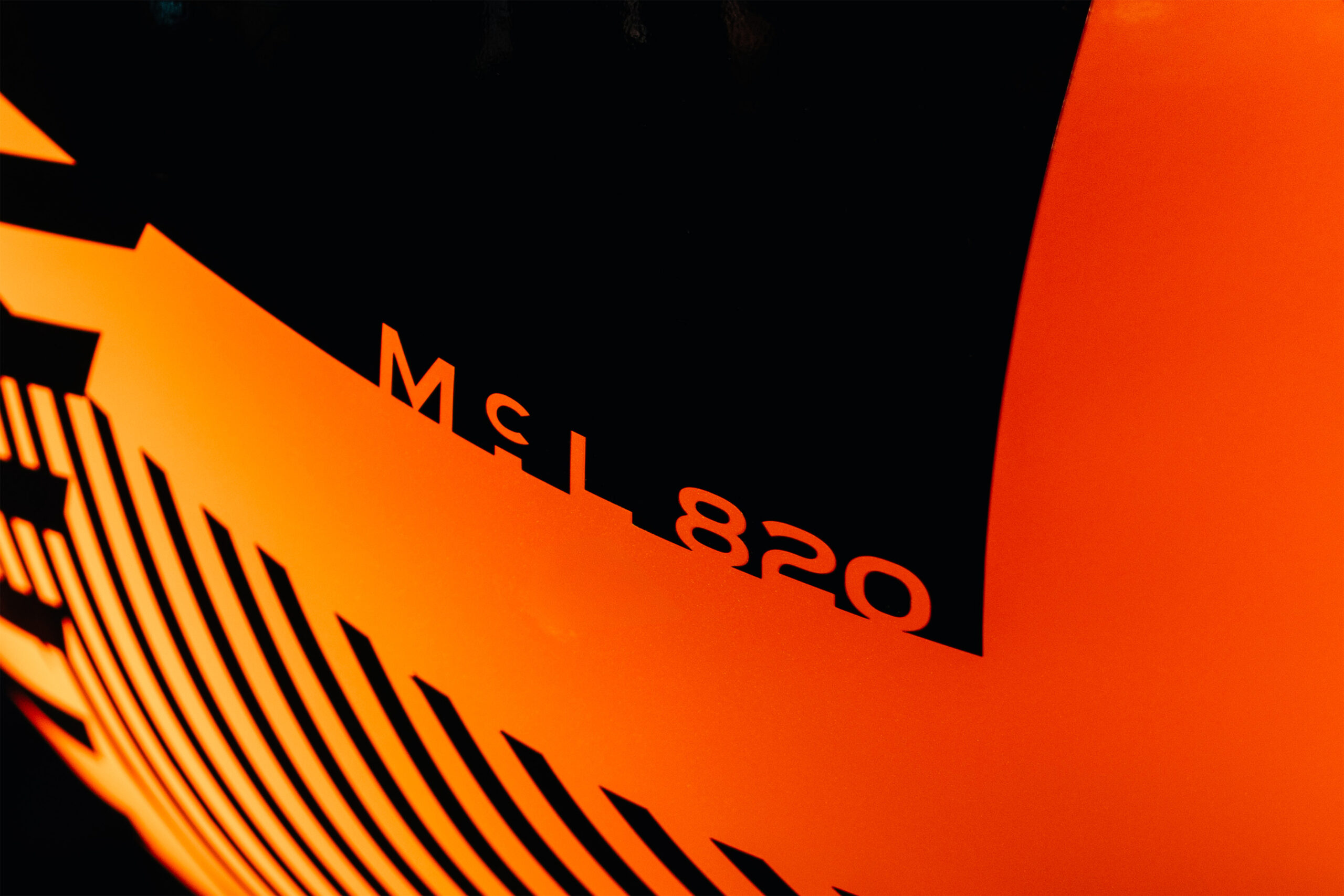
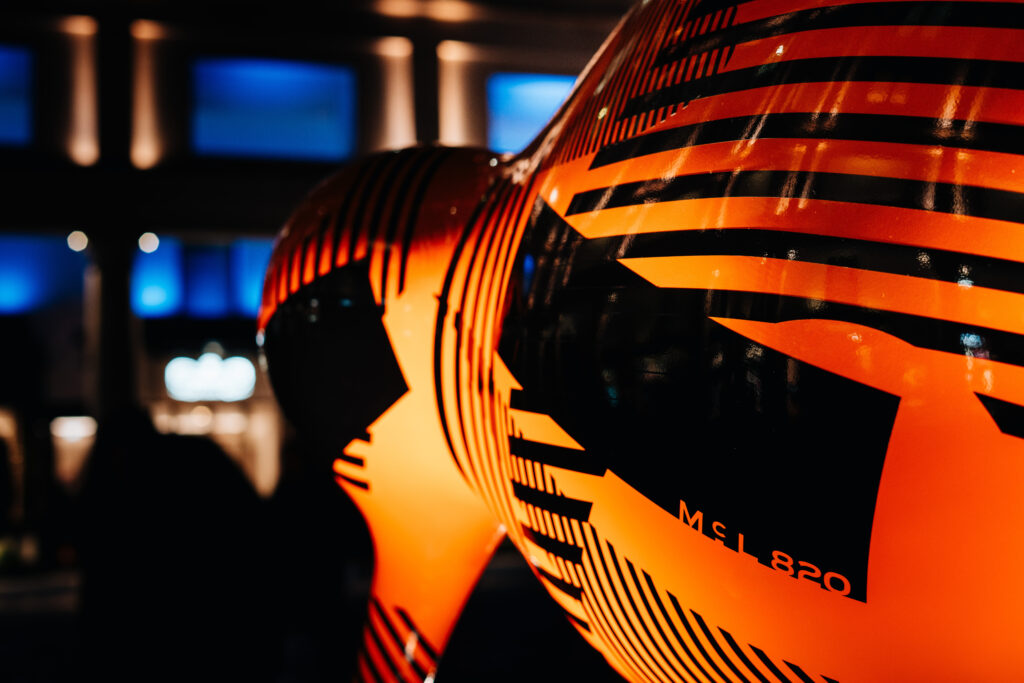
At 15:00 GMT on 30 October, McLaren confirmed that the next car in its series range will be called McL 820 and will arrive in 2027. The company then did something charming and slightly mad. It unveiled a statue of a kiwi in central London and wrapped the whole bird in camouflage printed with the new name.
The choice of animal is no accident. Bruce McLaren was a New Zealander, and the kiwi was his emblem before McLaren was a name anyone outside motor racing knew. Dress it in camouflage and you borrow the language of the prototype test fleet, those swaddled mules that trundle round the Surrey lanes while the rest of us squint at the wheel arches. McLaren has told us the car exists and has declined to let us look.
The sums
The release is explicit about the arithmetic. The 820 is the power output in PS, the metric horsepower. That works out at 603kW, or just under 809bhp in the unit most of us still reach for. McLaren has hung output figures on its cars since the 650S arrived in 2014, so the idea carries no surprise. The 570S and 720S followed, then the 765LT and the 750S. The 750S makes 750PS, which puts McL 820 a full 70PS clear of it.
What came before the numbers makes better trivia. The company’s first road car of the modern era, in 2011, was the MP4-12C, a name that read like a laboratory reference. The 12 was a performance index and the C stood for carbon fibre. It took McLaren a few years to decide that a number people could remember beat a code they could not.
Three letters with a pedigree
The prefix has a longer story than the number. For 36 seasons McLaren’s Formula 1 cars wore the letters MP4, which began as Marlboro Project 4 after Ron Dennis’s Project Four outfit merged with the team in 1980. The first of them, the MP4/1 of 1981, was the first Formula 1 car built around a carbon-fibre composite monocoque, and every grand prix car since owes it a debt. That is the lineage the MP4-12C carried onto the road.
When the team changed its naming in 2017 the race cars became MCL, starting with the MCL32. The MCL40 and the MCL-HY Hypercar wear the same letters today. Now the road car joins them, spelt McL in the release, with a lower-case c. Same letters, different capitalisation, and a plain signal that the cars from Woking and the cars from the Formula 1 team are meant to be read as one family.
Bruce’s unfinished business
McLaren’s own boilerplate says Bruce dreamed of a road car, and it did not exaggerate. His version was the M6GT, a closed-roof coupé drawn from the Can-Am car that took him to the 1967 championship, with a Chevrolet V8 behind the seats. Bruce ran one on the road himself. He was killed at Goodwood in June 1970, aged 32, testing a Can-Am car, and the M6GT went with him.
The Can-Am cars carried on without him and won five titles in a row. The road car had to wait more than two decades.
The F1 began, as the best ideas often do, with a delay. Gordon Murray and Ron Dennis were stuck on a late flight home after the 1988 Italian Grand Prix when Murray talked Dennis into building the ultimate road car. What arrived in 1992 had the driver in the middle and a BMW V12 behind him. The engine bay was lined with gold foil, because gold is among the best heat reflectors there is. It reached 240.1mph in 1998. McLaren built 106 F1s in all, and only 64 were road cars. The rest were prototypes and racers, and the F1 GTR won the 1995 Le Mans 24 Hours outright at McLaren’s first attempt.
The modern company began with the 12C in 2011 and climbed back to the top of the tree with the P1 in 2013, which joined Porsche’s 918 and Ferrari’s LaFerrari in the hybrid hypercar conversation. The Artura of 2021 became McLaren’s first series-production hybrid. The W1 of 2024 took the F1 and P1 successor brief and ran with it. McLaren has said the in-house 4.0-litre V8 that arrived with the W1 will sit at the heart of future series cars. The release says nothing about McL 820’s engine, so that question stays open.

What the release does not say
The release is silent on body style and engine layout. It gives no price, and no performance figure beyond the one in the name. It does not say whether McL 820 replaces an existing car or joins the range alongside it. McLaren says details follow in 2027 and the car arrives the same year, so the gap between reveal and showroom is short.
820PS and the British road
Britain is a hard country for a supercar to justify its power. The motorway limit is 70mph, the average A-road demands patience, and the best stretch of tarmac in any county always has a tractor on it. The number in the name works as a promise about how effortlessly the car will do ordinary things, with the rest held in reserve.
McLaren has always been better at the ordinary things than its reputation for outright speed suggests. Carbon tubs and hydraulic steering made the 720S and 750S unusually good at the slow stuff, the damp B-road at 40mph where steering feel and ride quality matter more than any figure on a spec sheet. Whether McL 820 keeps that character is the question that matters more than the badge.

The question Bruce asked
McLaren’s closing line quotes the question its founder asked more than 60 years ago: how do we make this one better than the last? It is a hard question to put to the 750S, which was already a very good car. We now wait for 2027 to hear the answer. The kiwi can keep its disguise on until then.