
About The Author
UK vehicle production rose sharply in September, but the headline increase comes against a weak comparison and does not mean the sector is back to sustained growth.
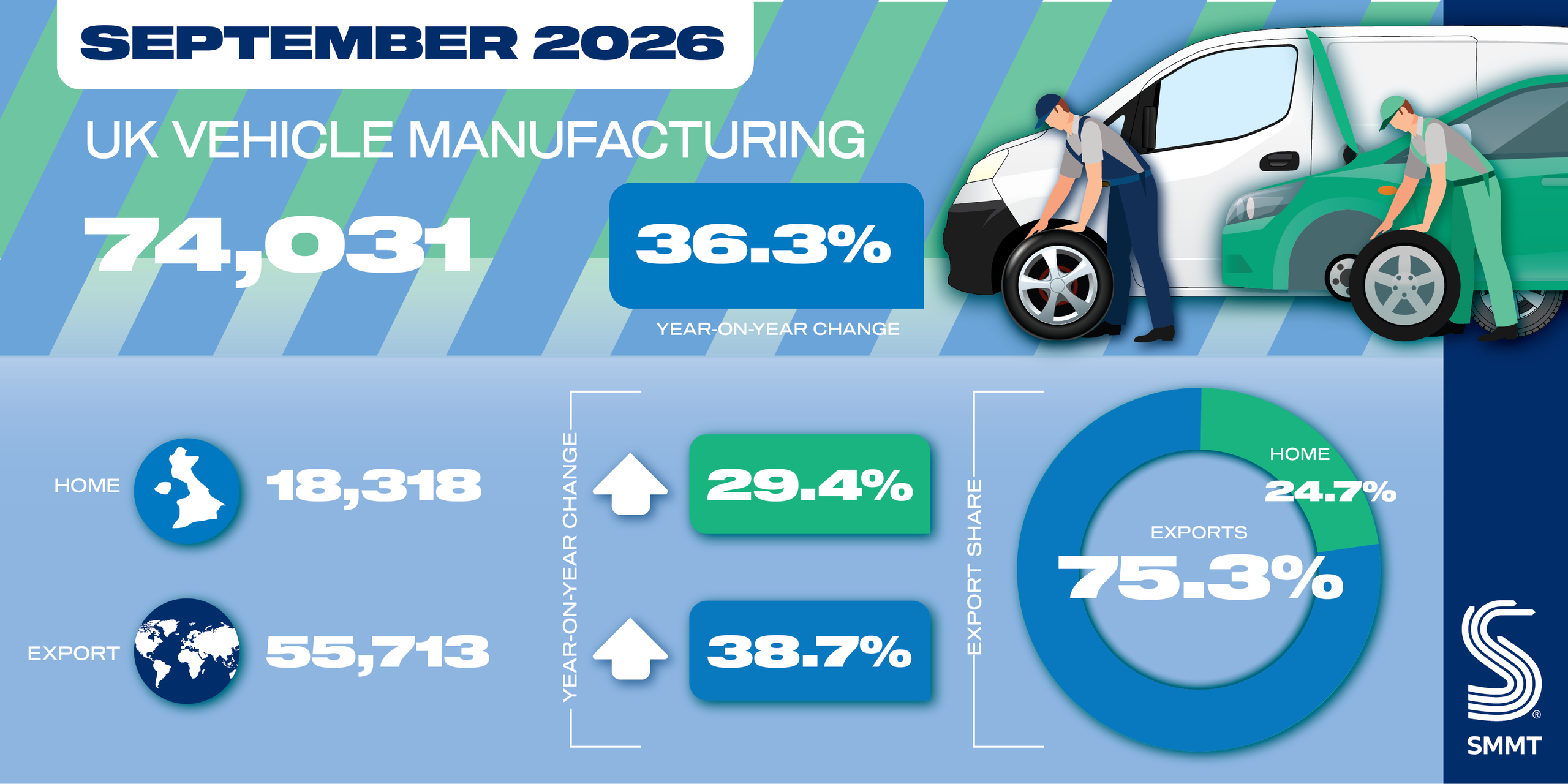
Figures published by the Society of Motor Manufacturers and Traders (SMMT) show that factories built 74,031 cars and commercial vehicles during the month, 36.3% more than in September 2025. The SMMT release appeared in the Newspress UK round-up received on 29 October. The trade body says last year’s comparison was depressed by production stoppages after a major cyber incident.
Cars increased; commercial vehicles dipped
Car production reached 70,831 units, up 38.6% year on year and the strongest September total since 2023, according to the SMMT figures. Electrified cars accounted for 42.3% of output, while 76.7% of cars built were exported.
The commercial-vehicle picture was weaker. Output fell 0.9% compared with September last year, as production for the domestic market declined. The SMMT says total car and commercial-vehicle production across the first nine months of 2026 was 564,537, down 3% on the same period in 2025.
Why the 36% rise needs context
The year-on-year jump is real, but the comparison is affected by last year’s exceptional factory disruption. It should not be read as a 36% rise in vehicle sales, demand or jobs: production figures count vehicles built, not vehicles bought by UK drivers.
Reuters’ report on the same figures also notes the cyber-disruption comparison and the year-to-date decline. SMMT’s chief executive says manufacturers continue to face pressure from the UK zero-emission vehicle mandate and trade rules. That is the industry body’s policy position; the production data itself shows a monthly rebound alongside a lower year-to-date total.
The independent outlook cited in SMMT’s release expects UK light-vehicle production to fall 2.3% across 2026 before a possible recovery in 2027 as new models enter production. That remains a forecast, rather than a confirmed outcome.
For motorists, the figures are an indicator of manufacturing activity, not a direct guide to showroom stock or prices. The next monthly releases will show whether September’s stronger output is sustained.