
About The Author
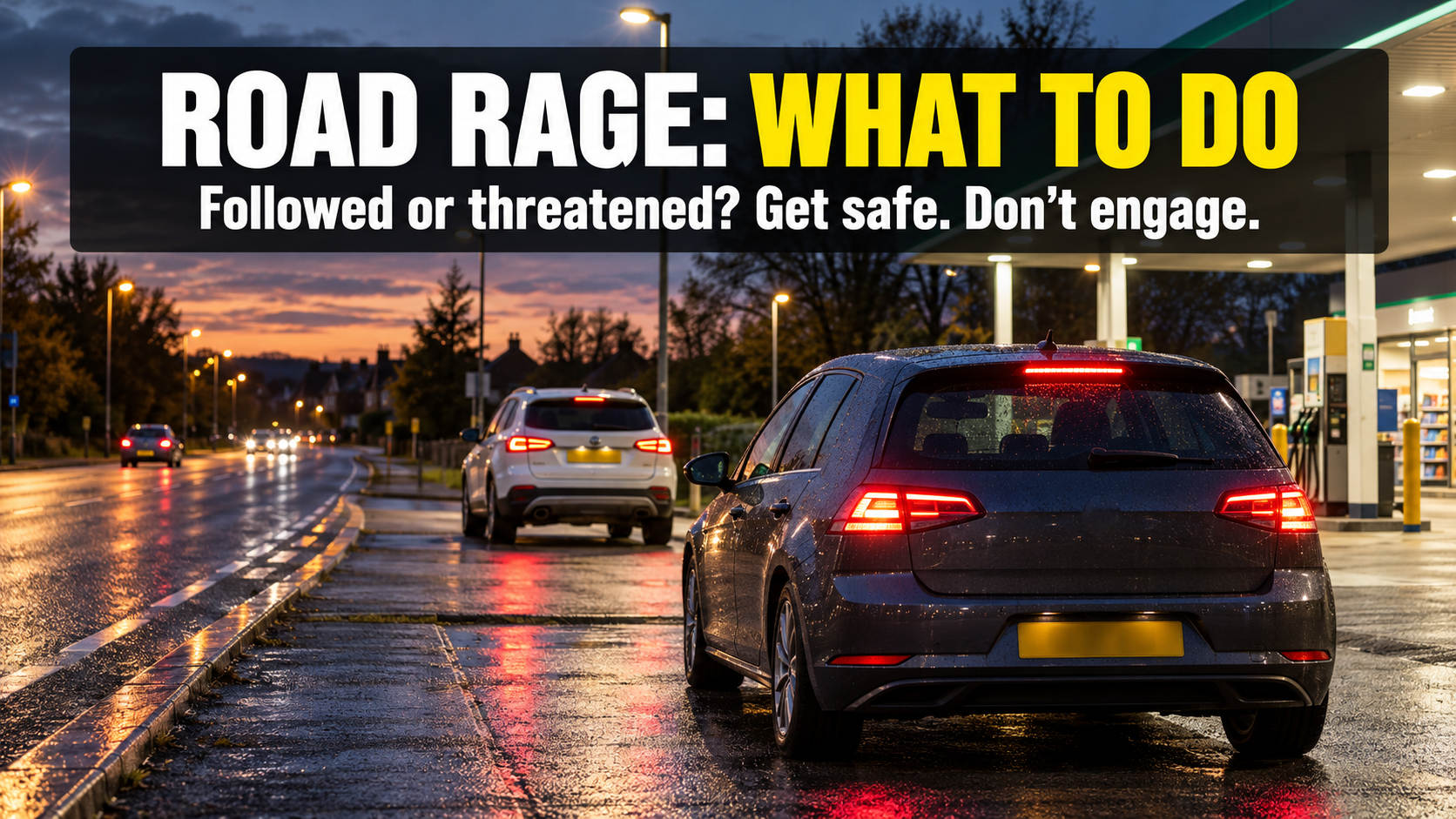
If another driver is tailgating, following your turns or trying to make you stop, focus on distance and safety. Do not try to win the argument on the road.
A disagreement can start with a horn, a late lane change or a misunderstanding at a junction. What happens next is not always “road rage” in the legal sense: the term describes a range of conduct, from angry gestures to threats, damage or assault. The practical priority is the same: avoid escalation, get help if danger is immediate and record what happened only when it is safe.
If someone is driving aggressively behind you
Keep a steady course and leave extra room between your car and the vehicle ahead. That gives you more time to slow down gently and reduces the chance of being forced into a sudden stop. Avoid brake-checking, blocking the other vehicle, shouting or making gestures. Those actions can turn a tense moment into a more dangerous one, and they do not help establish what happened.
If it is safe, let the other driver pass. Do not speed to stay ahead or follow them to get a registration number. If they continue to follow, choose a route toward a busy, well-lit place where staff or other people are likely to be present, such as a staffed petrol station. Do not drive home if that would reveal where you live, and avoid turning into an isolated side road or a place where your vehicle could be boxed in.
If they stop or approach your car
Keep the doors locked and the windows mostly closed. Do not get out to argue. If there is space and it is safe to move away, leave calmly; do not drive toward a person or make a risky manoeuvre to escape. If you are trapped in traffic, stay in the vehicle, keep enough space ahead to move when safe, and avoid responding to provocation.
If a passenger is with you, ask them to call police or a trusted contact and describe your location. If you are alone, do not pick up or operate a phone while the car is moving. When you can stop safely, call 999 if the threat is happening now and you fear for your safety, someone is being assaulted or there is another immediate danger. GOV.UK distinguishes emergencies from non-emergency reports; use 101 or your local force’s online route when the incident is over and no one is in immediate danger.
If a driver follows you for several turns
Do not test whether they are following by taking repeated turns or going somewhere isolated. Keep to well-used roads and make your destination a safe public place. If you are on a motorway or another high-speed road, do not stop on a live carriageway to confront them; follow road signs and official safety instructions to reach a place of relative safety.
If you reach a staffed location, stay in the car until you can ask for help safely. Tell staff or police what is happening, where you are and whether the other driver is still there. If the driver leaves, do not chase them. Record the direction they went only if you can do so without putting yourself or anyone else at risk.
Know when and how to report it
Call 999 if someone is in immediate danger, the threat is ongoing or a serious offence is happening now. If the incident has ended, contact the local police through 101 or its official online reporting channel. Tell the police clearly if there was a genuine threat of violence, physical contact, deliberate damage, discriminatory abuse or dangerous driving. There is no single offence called “road rage”; the police will consider the reported conduct and available evidence. The outcome depends on the circumstances, and footage does not guarantee a prosecution.
Some dash-cam portals are designed for particular driving offences and geographic areas. They may not be the right route for threats, assaults or an active emergency. Check the relevant force’s own instructions instead of assuming that a form called “Operation Snap” accepts every kind of report.
Preserve evidence without creating a new risk
When you are safe, write down the time, location, direction of travel and a plain description of the vehicle and driver. Include the words or actions you remember as accurately as possible; separate what you saw from what you inferred. If there were witnesses, note how to contact them without pressuring them to take sides.
If your dash cam recorded the incident, save the original file before it is overwritten. Keep an untouched copy and note the camera’s clock setting if it may be inaccurate. Follow the police force’s instructions about how to send footage. Avoid adding captions or edits to the evidence copy, and do not post identifiable people or number plates online to invite strangers to identify or confront them.
If there was a collision, injury or damage
Prioritise people and road safety. Call 999 if anyone needs urgent help or the scene creates immediate danger. Do not chase a driver who leaves. The Highway Code’s rule 286 and section 170 of the Road Traffic Act set out duties to stop, provide details and report certain collisions; our UK post-collision checklist explains those steps in more detail.
After you are safe
Keep any police reference number, photographs and original footage together. Tell your insurer if there was a collision or damage and follow its instructions. If the incident has left you shaken, give yourself time before driving again. If you need to continue, ask someone else to drive or wait until you feel able to concentrate.
If you want to share footage with Dodgy Drivers, our video submission form is separate from a police report. You can ask us to blur identifying details before publication; describe exactly what you want blurred in the “Information About Your Clip” field.
Sources checked 26 October 2026
- Ask the Police, Q383: road-rage incidents and police response.
- GOV.UK: contact the police (999 and 101).
- The Highway Code, rule 147.
- The Highway Code, rules 283 and 286.
- Road Traffic Act 1988, section 170.
This is general safety information, not legal advice. Call 999 for immediate danger or an ongoing threat. No affiliate links.