
About The Author
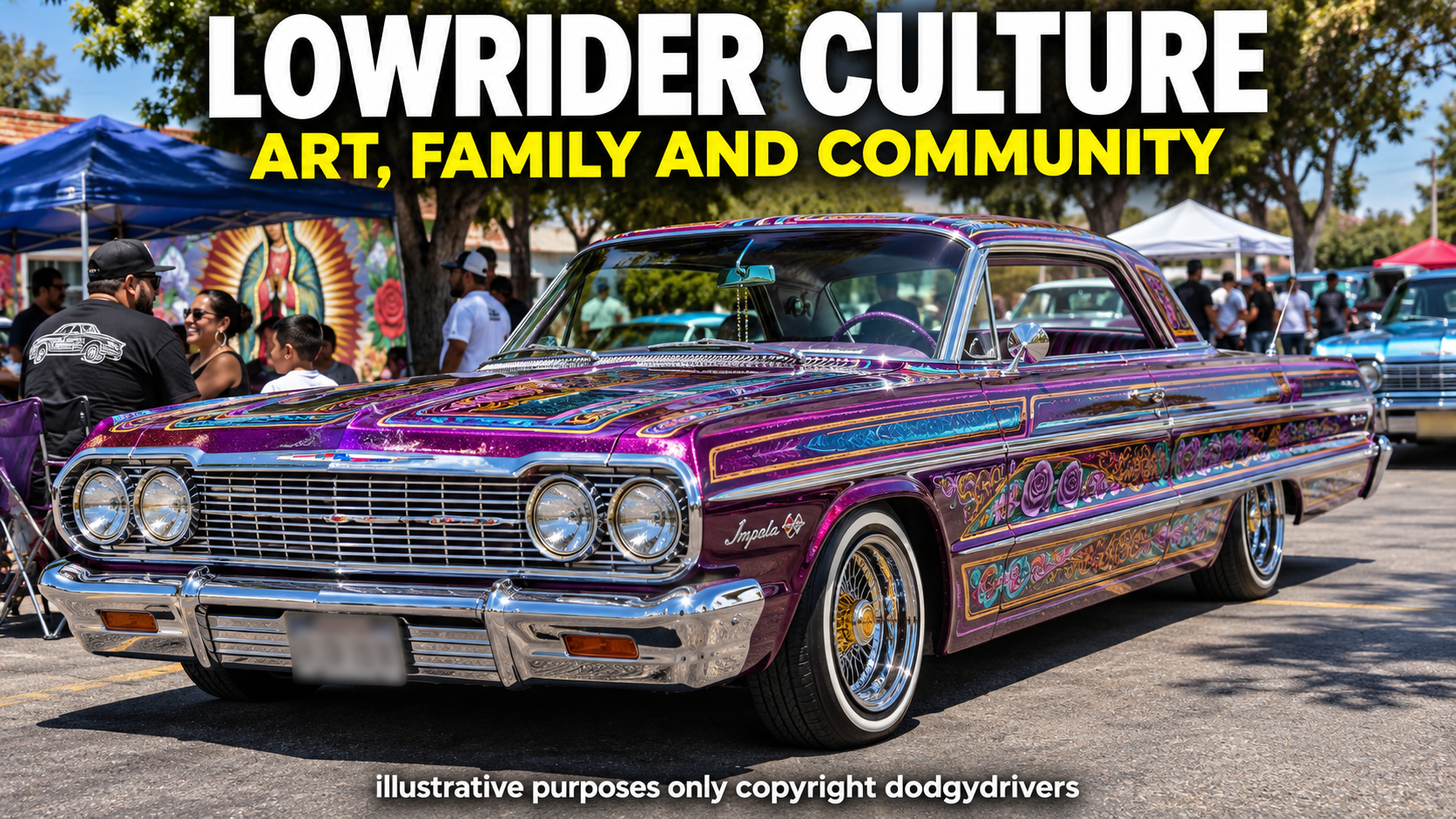
The lowrider is one of motoring’s most recognisable silhouettes: a long, carefully finished car riding close to the road, sometimes rising and dipping on hydraulics. But treating it as a suspension trick misses why these cars have mattered for generations. They are also mobile artwork, family projects and expressions of Mexican American identity — and their history includes a long dispute about who was allowed to cruise in public.
The car as a canvas
The Smithsonian’s National Museum of African American History and Culture traces lowriding to Mexican American communities in the US Southwest and southern California. Enthusiasts turned older cars into individual statements with paint, upholstery, pinstriping and intricate detailing. Some were designed to be seen moving slowly through a neighbourhood; others became show cars whose finishing work rewarded a closer look.
A conventional hot rod often celebrates speed. A lowrider can celebrate patience. Layered paint, engraving, interior fabrics and the careful relationship between bodywork and ride height all make the builder’s choices visible. Hydraulics are only one element, and not every lowrider needs the most extreme setup. The point is that the car communicates its owner’s taste and the community around it.
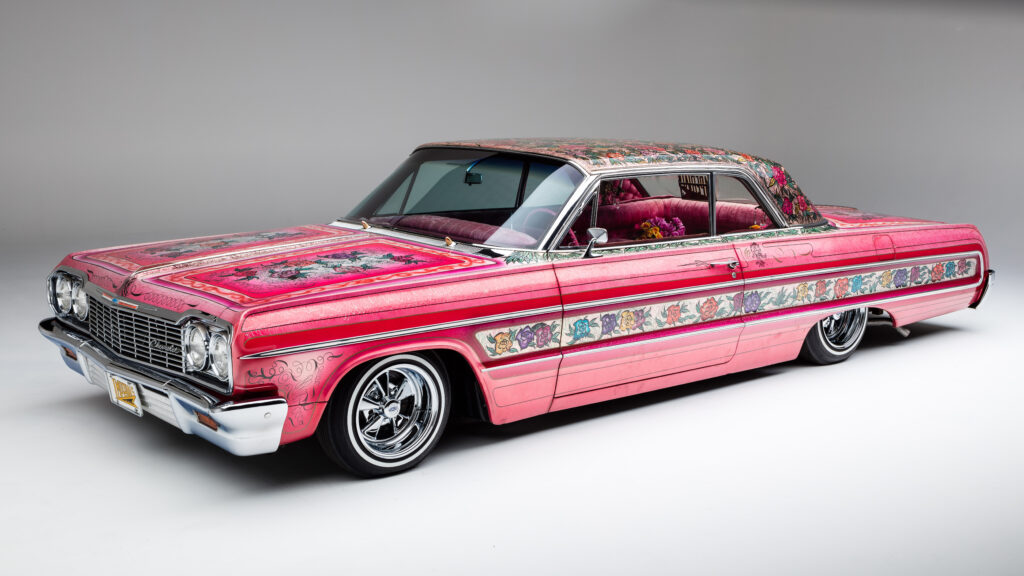
That personal aspect helps explain why family and club histories matter. The Smithsonian’s exhibition, Corazón y vida: Lowriding Culture, placed photographs, club clothing, trophies and craft tools alongside actual cars. It featured the 1963 Chevrolet Impala El Rey and the 1964 Impala Gypsy Rose. Those objects tell a story that a specification sheet cannot: builders invest years of labour and relationships in a vehicle that can be passed between generations.
Why cruising became controversial
Lowriding’s public visibility also made it a target for restrictions. California’s Assembly Transportation Committee analysis of AB 436 explains that state law had previously allowed local authorities to regulate or prohibit cruising, while another provision targeted low vehicle modifications. The 2023 legislation removed those authorisations. That is a meaningful change in the legal treatment of the culture, but it should not be misread as a free pass to ignore ordinary traffic, safety, noise or vehicle-construction rules.
There is an important distinction between a lawful gathering of modified cars and dangerous driving. A local authority’s ability to impose a blanket anti-cruising restriction is not the same question as enforcement of speeding, obstruction or unsafe mechanical modifications. That nuance is easy to lose in arguments about car meets on either side of the Atlantic.
A culture bigger than one city or one community
The Smithsonian also describes how lowriding influenced wider American visual and music culture and attracted enthusiasts beyond its original communities. That spread should not erase the movement’s Mexican American roots. It is possible to admire the engineering and aesthetics while understanding that cruising routes, neighbourhoods, clubs and family workshops give those cars their meaning.
For British enthusiasts, the lesson is not to copy a US build and claim the same history. It is to look more carefully at any car scene: who builds the cars, who teaches the skills, which spaces let the community meet, and how local rules shape what can be enjoyed in public.
A lowrider can be spectacular parked under show lights. To understand it properly, ask about the people who made it, not just how far the suspension moves.
Two cars, decades of family work
The Smithsonian’s National Museum of American History puts two Impalas at the centre of its exhibition Corazón y vida: Lowriding Culture. They make a useful starting point because neither is simply a factory car with its suspension altered.
El Rey began as a 1963 Chevrolet Impala Super Sport. According to the museum, three generations of the De Alba family worked on it over six years. The car belonged to Albert De Alba’s father-in-law, and its name honours both him and a favourite song, “El Rey”, associated with Vicente Fernández. Its murals, candy-red paint, engraved chrome and digital dashboard tell a family story through individual choices.
Open the boot and the hydraulic installation is detailed as carefully as the visible bodywork. The museum describes an undercarriage designed both to withstand the stress of hydraulics and to be seen. That distinction matters: the mechanical work and the presentation are part of the same build.
Gypsy Rose, a 1964 Impala associated with Jesse Valadez Sr. and his family, made a different impression. Its hand-painted roses and customised interior helped make it recognisable beyond the streets of Los Angeles. The Smithsonian records its appearances in the opening credits of Chico and the Man and the 1979 film Boulevard Nights. Its interior included an eight-track system, television and even a candle sconce.
The work behind the shine
Paint is only one part of the craft. The museum describes builders selecting candy, pearl and flake finishes, adding murals, engraving glass, reupholstering interiors and changing wheels. A car can take years of labour, and much of that knowledge passes through workshops and families. Not every finished car uses the same combination of techniques.
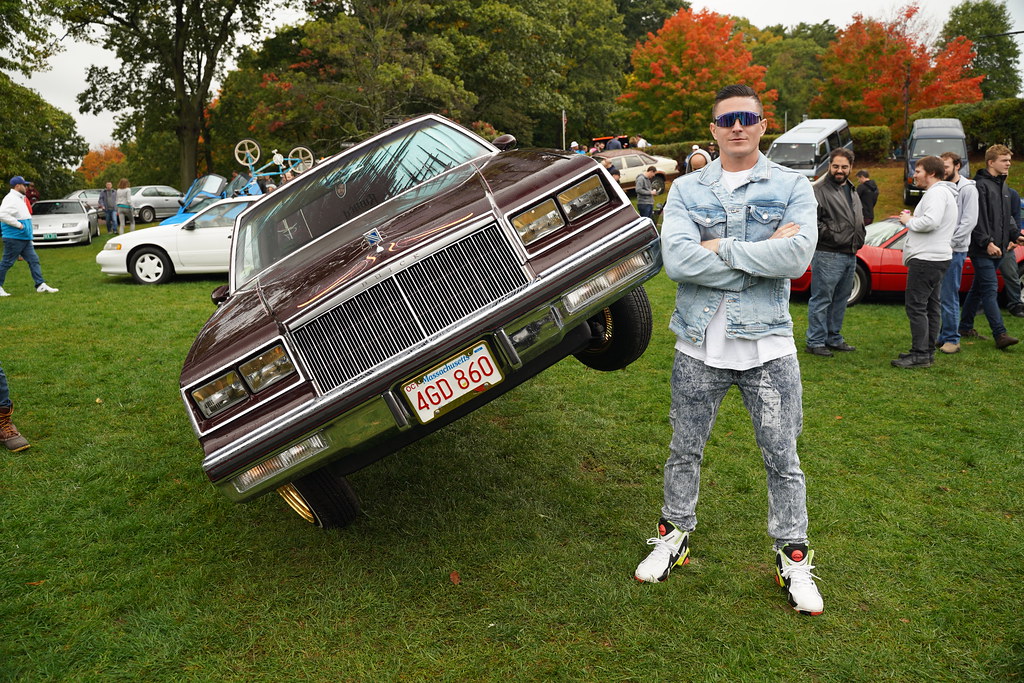
Hydraulics can change a car’s ride height and allow the dramatic movement often associated with lowriders. They also demand mechanical expertise. Looking only at a bouncing car misses the preparation, finishing and decisions that can make it a recognisable individual creation even when parked.
The Smithsonian also traces the culture’s reach into west-coast hip-hop imagery and into communities beyond its Mexican American roots. That wider influence is part of the story; so are the neighbourhoods, families and clubs that sustained the work in the first place.
Sources: Smithsonian: El Rey; Smithsonian: Gypsy Rose; Smithsonian: the craft; Smithsonian: lowriders.



Leave a Reply
You must be logged in to post a comment.