
About The Author
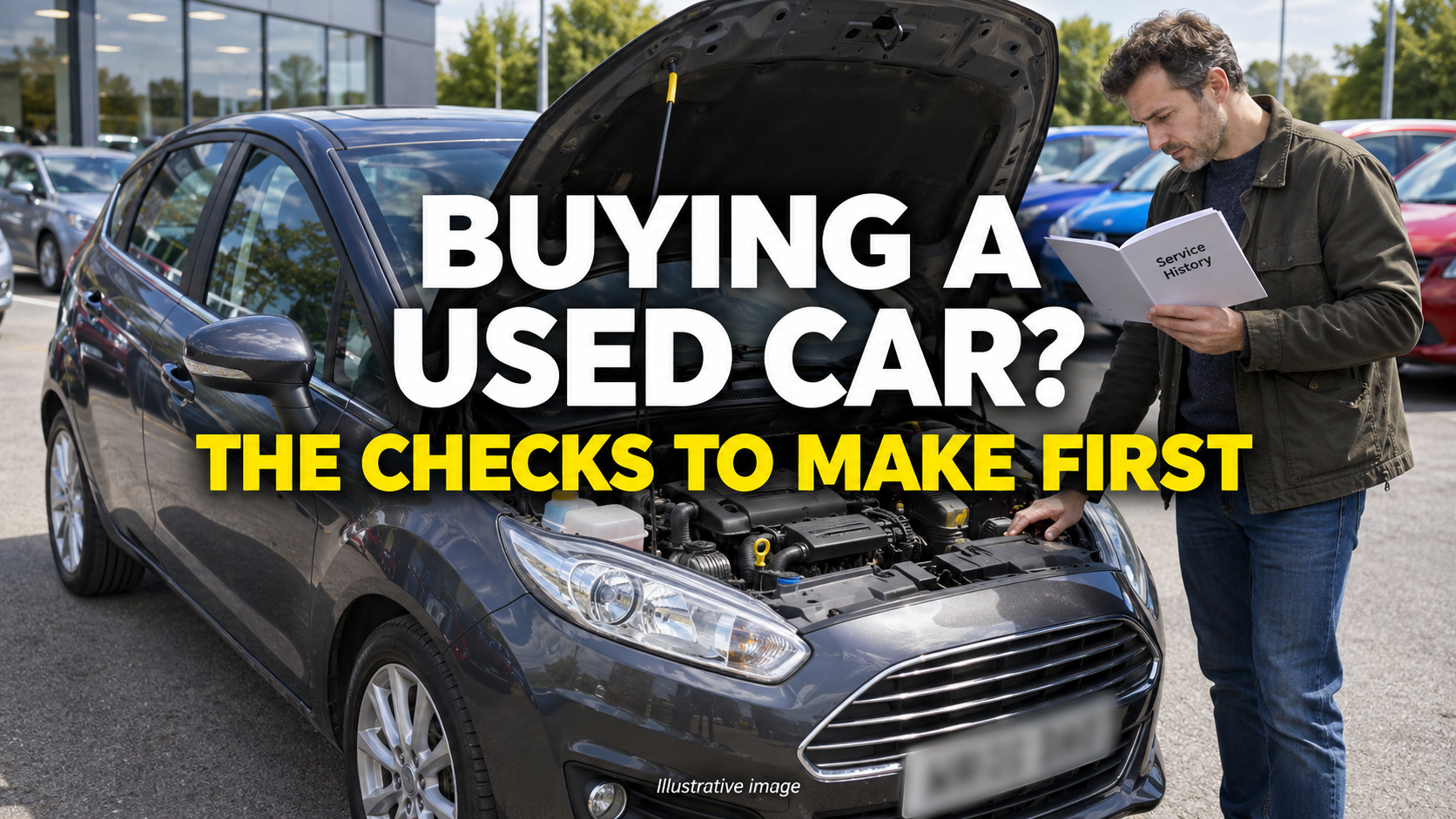
A bucket of foaming shampoo, a coat of silicone dashboard spray and a ten-minute spin around the block can make almost any secondhand car feel like a bargain. The real detective work happens before you even leave the house—including knowing where the government’s own buyer guidance gets the law wrong.
Every experienced car buyer knows the intoxicating effect of fresh polish. You arrive after a two-hour drive, the car is gleaming in the afternoon sun, the seller has the kettle on, and within five minutes you are mentally arranging your driving playlists for the trip home. In the motor trade, it is known as falling in love with the paintwork—and it has funded more gearbox rebuilds and suspension overhauls than almost any other human weakness.
The secret to buying well in the used market isn’t expecting an eight-year-old hatchback to have the unblemished provenance of a concours winner. Older cars have lived lives; they acquire stone chips, worn seat bolsters, and the occasional suspension bush that has seen better days.
Instead, smart buying is about making sure the car in the classified advert, the car on the government’s databases, the car described in the service folder, and the piece of metal sitting on the driveway are all telling you the exact same story. Better still, you can do half of that investigation from your sofa before spending a penny on train tickets or motorway fuel.
1. Start at Home: The Registration Cross-Check
Before you arrange a viewing, GOV.UK’s buyer checklist starts with a simple request: ask the seller for the registration number, the make and model, and the MOT test number.
If a seller obscures the number plates in the advert photographs and suddenly goes coy when you ask for the registration over the phone or by message, treat that reluctance as your cue to pause. While there doesn’t have to be a sinister motive, you cannot verify a car you aren’t allowed to look up.
Armed with the registration, run it through the free DVLA vehicle enquiry service and the GOV.UK MOT history portal. You are looking for basic forensic consistency:
Does the DVLA record match the advert? Check the exact make, model, engine capacity, year of registration, and recorded colour. A car advertised as satin black that the DVLA still thinks is silver might simply have a vinyl wrap that nobody bothered to declare on the V5C—or it might be wearing a set of identity plates that don’t belong to it. Ask for the explanation first, and check the evidence rather than accepting a hurried reassurance.
Is there an open safety recall? Both the MOT checker and GOV.UK’s dedicated recall portal allow you to check whether the car (or one of its components) is subject to an outstanding manufacturer safety recall. If one flags up, speak to an authorised main dealer to find out what the recall entails—including whether the vehicle is under an urgent ‘stop-drive’ instruction—before you go any further.
2. Read the MOT History Like a Biography, Not a Certificate
A seller declaring “12 months’ MOT—flew through!” is offering you far less reassurance than they think. An MOT is a snapshot check of minimum legal standards on a single Tuesday morning; it is neither a mechanical warranty nor proof that the timing belt isn’t frayed to its last three threads.
The real goldmine on the free GOV.UK MOT history service (check-mot.service.gov.uk) is the timeline leading up to today. For cars, vans, and motorcycles tested in England, Scotland, and Wales, online records stretch back to 2005 (or 2018 for HGVs, trailers, buses, and coaches). If the car has spent its life in Northern Ireland, online test records only go back to 2017—and you cannot download PDF certificates through the portal for NI tests—so don’t panic if an older Ulster-registered car has a shorter digital trail. (If you have the 11-digit reference number from the car’s V5C logbook, the GB portal will also show you where each test was carried out).
Read the history across several years and look for patterns:
The Neglected Advisory: A single advisory note for a slightly worn drop-link on a ten-year-old estate car is normal wear and tear. What should make you narrow your eyes is the same advisory appearing three years on the bounce—such as corroded brake pipes, misting shock absorbers, or tyres perpetually scraping through on the legal limit. A repeated advisory could be a sign that maintenance has been neglected, especially if the same concern persists year after year. Ask what work was done and look for invoices; the test record alone cannot establish whether the issue was ignored.
The Miracle Clean Sheet: If a car failed last year with a shopping list of underside corrosion warnings, and then passed two days later with zero advisories and no corresponding welding invoices in the history folder, ask what was done and request the paperwork.
The Mileage Trajectory: Plot the recorded odometer readings year by year against the advert, the service book, and the physical wear on the steering wheel and pedal rubbers. Occasionally, a tester fat-fingers a digit and logs 64,000 miles as 94,000, creating an apparent dip the following year—a recording error that is easily cross-checked against dated garage invoices. Unexplained gaps or reversals without paperwork, however, should never be silently ignored.
3. The V5C Logbook—and What It Cannot Tell You
When you arrive to view the car, ask to inspect the original V5C registration certificate (the logbook). Hold it up to the light to check for the official ‘DVL’ watermark, and check the serial number. GOV.UK’s current checklist warns buyers to make sure the serial number is not between BG8229501 and BG9999030, or BI2305501 and BI2800000—ranges associated with stolen blank documents used to launder stolen vehicles. (Always check the live GOV.UK guidance on the day you view, rather than relying on a memorised list, and call the police as soon as it is safe to do so if you spot a suspect certificate).
Above all, remember the sentence printed plainly across the front of every V5C: the logbook is not proof of ownership. It merely records the registered keeper responsible for taxing and insuring the vehicle on the road.
A car can have a genuine V5C in the seller’s name and still legally belong to a finance house under an unsettled Hire Purchase or PCP agreement—or carry an insurance write-off past that never came up in conversation. Alongside asking the seller how they acquired the car and reading their purchase invoice, consider paying a few pounds for a private online history check, which checks commercial databases for outstanding finance, stolen markers, mileage discrepancies, and salvage history.
Understanding Insurance Write-Offs
Under the insurers’ salvage code of practice (introduced in October 2017), total-loss vehicles are divided into two categories:
Actual Losses (Category A and Category B): Vehicles so severely damaged that they cannot and should not ever be repaired or returned to the road, even if they look superficially straight. The DVLA will not re-register them.
Constructive Losses (Category S and Category N): Vehicles that were uneconomical for the insurer to repair, where Cat S indicates repairable structural damage and Cat N indicates non-structural damage.
As the government’s consumer guide notes, there is nothing inherently wrong with buying a Cat S or Cat N car that has been properly returned to roadworthy condition, and it can represent good value. However, a temptingly low price does not tell you who repaired the structure or how well they did it. Ask who handled the vehicle between the total-loss declaration and its return to the road, consider an independent engineer’s inspection to check for hidden structural damage, and get an insurance quote before you buy—not all insurers will cover previously written-off vehicles, and those that do often load the premium. (If you do buy one, you must inform your insurer; failing to disclose a write-off history can result in any future claim being rejected).
4. Daylight, Dry Paint, and Matching the Numbers
Never inspect a used car in the dark, under the flattering glow of a petrol station forecourt, or in pouring rain. Arrange enough time to inspect the car thoroughly in good daylight.
Start by verifying the car’s physical identity against the V5C. Locate the 17-character Vehicle Identification Number (VIN) on the vehicle itself—normally found at the base of the windscreen, on a manufacturer plate in the door shut, and stamped into the metal shell—and check the engine number. Make sure they match the V5C and DVLA records cleanly, with no signs of tampering.
Then work methodically through the car and its history:
Bodywork, Glass and Tyres: Check the condition of the tyres, lights, glass, and visible bodywork. Sight down the flanks to compare panel gaps and paint finish. Remember that a previous paint repair isn’t automatically sinister, just as an uneven finish doesn’t tell you the whole story of an impact—it simply gives you better questions to ask.
Stamps vs Invoices: Ask to see both keys and the service history. A stamped service book is useful, but itemised invoices answer a far more important question: what parts were actually fitted? On an older car, a dated invoice for a cambelt and water-pump change carries far more weight than a vague rubber stamp. Missing paperwork doesn’t prove neglect, but it leaves you with less evidence to justify the asking price.
The Test Drive: Provided you have the seller’s permission and appropriate insurance in place, take the car on the road. A test drive will reveal steering, clutch, brake, and suspension traits that a driveway poke-around never can—though no brief drive will reveal every fault. If you aren’t confident assessing mechanical condition yourself, book a qualified independent inspection before committing. Never allow a seller to rush your checks or pressure you into transferring money before you know exactly what—and whom—you are dealing with.
5. Know Your Legal Rights—and Watch Out for Whitehall’s Time-Warp Advice
What happens if you buy a car in good faith and subsequently discover a serious fault, or learn that it was previously an undeclared insurance write-off?
Your legal remedies depend heavily on whether you bought the vehicle from a motor trader (a dealer) or a private seller—and this is one area where you should not rely blindly on the government’s own guidance pages.
Remarkably, Section 3.2 of the government’s official online guide, Buying repaired written-off vehicles: a consumer guide, still tells the public:
“A vehicle bought from a dealer is covered by the Sale of Goods Act. Any vehicle sold must therefore be ‘as described’, ‘of satisfactory quality’ and ‘fit for purpose’… If you purchase a vehicle which does not comply with the above you are entitled to return the vehicle and receive your money back. This must be done in within 6 months of purchase.”
We raised the issue with the Department for Transport on X:
Besides the clumsy grammar (“in within 6 months”), that piece of Whitehall advice is more than a decade out of date:
If You Buy from a Dealer (Trader): Since October 2015, business-to-consumer car sales have been governed by the Consumer Rights Act 2015, which replaced the Sale of Goods Act 1979 for retail buyers. While the car must still be of satisfactory quality, fit for purpose, and as described, you do not have an unconditional six-month window to simply hand back the keys for an instant full refund. Under the 2015 Act, you have a short-term right to reject the car for a full refund within the first 30 days if it breaches those statutory standards. After 30 days (and within the first six months), the law presumes the fault was present at delivery unless the trader proves otherwise, but you must ordinarily give the dealer one opportunity to repair or replace the car before you can exercise a final right to reject it for a refund (from which the dealer may also be entitled to deduct a fair sum for the mileage you have covered).
If You Buy Privately: The Sale of Goods Act 1979 still applies, but the protections are narrower. The seller must have the right to sell the car and it must match its description; misrepresentation can also give rise to remedies. The implied satisfactory-quality requirement generally applies where the seller acts in the course of a business. Particular facts and statements can affect the position, so seek advice for a dispute.
Because consumer disputes turn on the exact facts of the sale and the jurisdiction, always keep copies of the original advert, text messages or emails, a signed and dated receipt, and every document handed over, and take current legal or Trading Standards advice if a deal goes sour.
6. Before You Drive Away
Once the money has changed hands and the receipt is signed, two final legal steps remain before your wheels touch the public road:
1. Confirm Your Insurance: Make sure your policy is live for the specific registration plate before setting off.
2. Tax the Car Immediately: Vehicle tax never carries over from the previous keeper. Before driving away, go to gov.uk/vehicle-tax and tax the vehicle using the reference number on the green ‘new keeper’ slip from the V5C logbook (checking any local administrative steps if you are buying or registering in Northern Ireland). Even if the car qualifies for £0 road tax in an exempt band, you must still complete the tax process with the DVLA before driving it home.
The best used-car purchase is rarely the shiniest car on the forecourt or the one boasting the longest list of gadgets. It is the car whose identity, condition, and paper trail you understand well enough to make a calm, informed decision—and whose remaining question marks have already been factored into the price you paid.
Sources: GOV.UK used vehicle checks · Department for Transport guide to repaired write-offs · Consumer Rights Act 2015


Leave a Reply
You must be logged in to post a comment.