

About The Author
Dodgy Drivers is launching a dedicated investigations hub for our original research into Britain’s roads, policing and motoring.
Led by Ian Robinson, Dodgy Drivers Investigations is built around a straightforward principle: the public should be able to examine the evidence behind decisions that affect them. Road policing is no exception.
Through Freedom of Information (FOI) requests, police disclosures, official records and original data analysis, we are examining how enforcement powers are used, what happens when the public reports suspected driving offences and how vehicle seizure and recovery systems operate.
What the evidence shows so far
Our Greater Manchester Section 59 investigation found that recorded vehicle seizures rose from 46 between July and October 2025 to 253 in the same four months of 2026 — an increase of 450 per cent. The figures come from Greater Manchester Police’s amended FOI response, reference FOI/26/018065/Q.
On 29 June 2026, section 8 of the Crime and Policing Act 2026 removed the statutory prior-warning requirement, which had been subject to exceptions, from Section 59 of the Police Reform Act 2002 in England and Wales. The other legal conditions for exercising the power remain in place.
Our original comparison, published on 25 November, covered eight forces. Today’s update expands the matched July–October comparison to twelve forces, eleven of which recorded increases. Merseyside’s figures remain provisional because its annual and monthly totals for 2025 do not reconcile. These are recorded vehicle counts, not population-adjusted enforcement rates, and they do not establish that the legislative change caused the increases.
Our West Midlands Operation Snap investigation has raised a different set of questions. The force’s published FOI response 513/26 records 1,311 cases for April 2025 marked as outside the 14-day notice of intended prosecution period.
That does not establish that police staff missed 1,311 deadlines, or that those cases would otherwise have resulted in prosecutions. The published records cannot distinguish footage submitted too late from reports received in time but subsequently delayed.
Dodgy Drivers put questions to West Midlands Police on 12 November and Greater Manchester Police on 16 November. As of 27 November, neither force has provided a substantive response.
You might also like
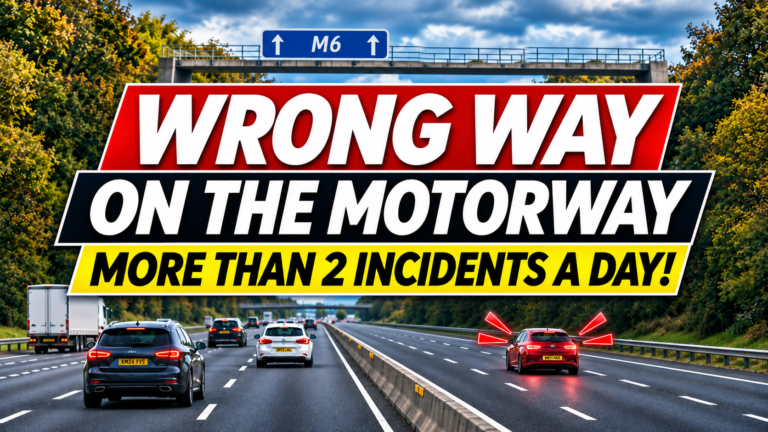 More than two wrong-way driving incidents a day logged on England’s motorways in 2025IAM RoadSmart analysis of National Highways data shows 922 reports of wrong-way motorway incidents in England in 2025, with the M1 recording the highest total.
 Suffolk Police deploy AI cameras on A14 after A12 trial flags 5,327 potential offencesSuffolk Police has deployed AI cameras on the A14 after a 28-day A12 trial flagged 5,327 potential offences. The force says human review precedes enforcement.
Three investigations, one research hub
Section 59 vehicle seizures — We are examining the use of seizure powers, changes in recorded volumes and differences between forces. Scotland and Northern Ireland have separate legal frameworks and are treated accordingly.
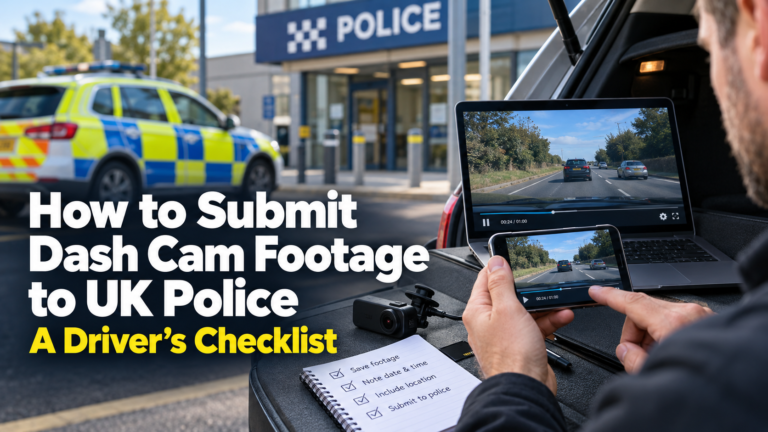
Operation Snap — We are examining the journey from a member of the public submitting footage to a police decision, including timescales, reasons for no further action, warnings, education courses and enforcement outcomes. A referral for processing is not necessarily a final disposal.
Follow the Money — Our developing investigation examines what happens to recovered and seized vehicles: whether they are returned, sold or destroyed, who receives the proceeds, and how recovery contracts and schemes are funded. An overall scheme surplus or gross auction receipt is not proof of profit from Section 59 seizures.
Making the evidence available
The new Investigations landing page brings our published reporting together and links to the research portal, its evidence library, methodology and Media & Licensing centre.
We distinguish recorded figures from interpretation, missing information from zero returns and questions from conclusions. Police forces record information differently; not every figure can be compared directly. As new disclosures arrive, our research will develop. Access to restricted source documents is subject to review and applicable disclosure restrictions.
We support effective policing against dangerous and antisocial driving. Scrutiny of the systems used to enforce the law is entirely compatible with that aim. This project is about accountability, transparency and understanding what the evidence says — including when it challenges our own assumptions.
Working with journalists, researchers and organisations
We welcome enquiries from local and national journalists, broadcasters, academics, independent researchers, road-safety organisations, motoring groups, legal specialists, elected representatives and public bodies interested in our work.
Whether you are investigating a particular force, studying enforcement patterns or working on a related story, contact us about collaboration, interviews, further research or licensed republication. We also welcome relevant context, corrections and additional evidence from police forces and other authorities.
If you have original documents or relevant experiences that could inform our investigations, please get in touch at info@dodgydrivers.co.uk. Avoid sending unnecessary personal information. Our research inbox is not a substitute for reporting a suspected offence to the police.
Explore Dodgy Drivers Investigations and our research portal.
When reporting on our original research, please credit Ian Robinson — Dodgy Drivers and link to the relevant published investigation. Republication of original articles or editorial graphics is subject to applicable rights; third-party rights and statutory exceptions remain unaffected.


Leave a Reply
You must be logged in to post a comment.