
About The Author
Cabinet members have signed off a £94,000 plan to enforce banned turns and access rules using number-plate cameras, though no start date for fines has been set.
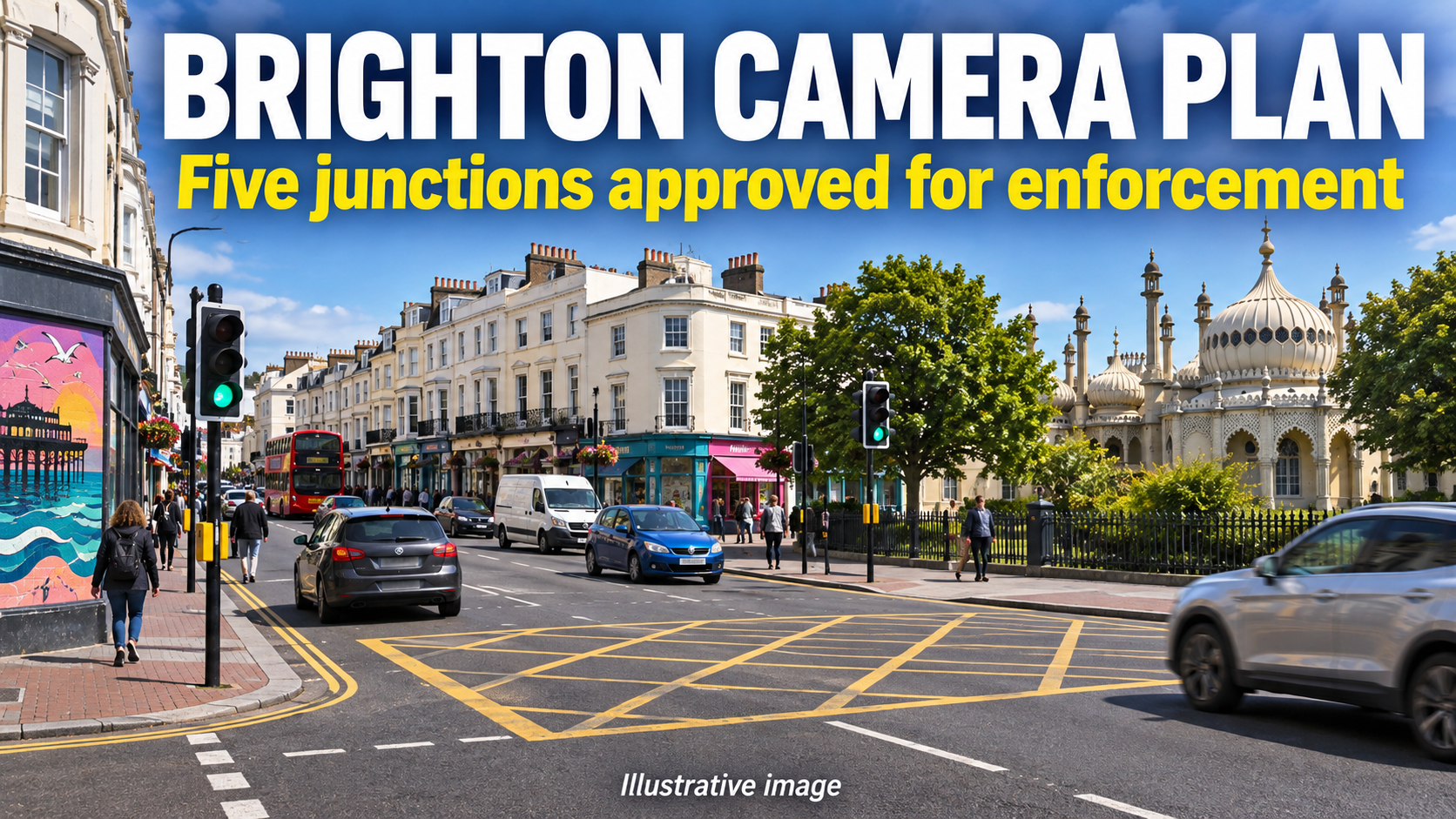
Brighton and Hove’s cabinet has approved plans to install moving-traffic enforcement cameras at five junctions across the city, targeting drivers who ignore banned turns, one-way rules and access restrictions.
The decision taken on 12 November remains subject to council call-in until 20 November and is scheduled to take formal effect on 21 November if left unchallenged. That date only clears the political hurdle, however; the council has not yet said when the cameras will actually be bolted to the posts or when penalty notices will start going out.
None of the road rules at the five sites are new. The changes simply replace scarce police enforcement with automatic number-plate recognition (ANPR) cameras at existing restrictions. According to the council’s cabinet report, the first five locations are:
Carden Avenue onto Carden Crescent: enforcing the existing one-way restriction.
London Road onto New England Road: enforcing a prohibited left turn.
Ditchling Road onto Baker Street: enforcing a prohibited left turn.
West Street onto Rottingdean High Street: enforcing a prohibited right turn.
Ditchling Road into Francis Street: enforcing a prohibition on motor vehicles, except for access.
On Francis Street, the council’s equality assessment notes that exemptions will stay in place for residents, visitors, deliveries, traders and essential services requiring access, though drivers will need to pay close attention to the terms on the street signs.
Council officers say the five junctions were picked using collision histories and evidence of drivers routinely ignoring the signs. During a single week of monitoring cited in the assessment papers, officers logged 175 contraventions at the Rottingdean junction and 57 at the turn from Ditchling Road into Baker Street. Those figures only record raw counts at targeted spots rather than the proportion of passing traffic breaking the rules, and installing the five cameras is projected to cost £94,000 from a CCTV capital programme funded through council borrowing.
A public consultation ahead of the vote drew 704 location-specific responses. Because residents could comment on more than one junction, that figure represents total submissions rather than 704 individual people.
A closer look at the consultation appendix also reveals a slight mismatch in how the results were badged. While the main cabinet report claims there was a “majority in favour” of camera enforcement at every site, the council’s own site-by-site breakdown shows support fell short of an outright majority of responses at two junctions. At London Road and New England Road, 61 out of 129 responses backed the cameras (under half), with 56 opposed, eight neutral and four giving no rating. At Ditchling Road and Baker Street, support stood at exactly half, with 56 of the 112 responses in favour. Support did, however, outnumber opposition at all five locations, despite respondents raising familiar concerns over unclear signage, business and resident access, and camera privacy.
When the hardware eventually goes live, motorists who make a mistake will not be fined straight away on their first slip-up. Under the council’s moving-traffic enforcement policy, each new camera site carries a six-month bedding-in period. Drivers caught for the first time during those six months will be sent a warning letter, though breaking the rule a second time at the same junction can trigger a penalty charge notice.
Alongside approving the initial five junctions, cabinet members handed delegated authority to the corporate director for city operations—working with the lead councillor for transport—to sign off future camera sites following local assessments and consultations. Whether councils are rolling out junction cameras or police forces are using unmarked HGV cabs to spot distracted drivers, automated and targeted enforcement continues to tighten across the network. For now, the rules on the ground in Brighton and Hove remain exactly as signed, while drivers wait on the council to confirm when the cameras will actually be switched on.
Leave a Reply
You must be logged in to post a comment.