

About The Author
There’s a difference between a police officer putting their foot down to get to an emergency, and an officer who’s been formally warned not to speed, signs a document saying he understands that, and then racks up 75 separate speeding infringements over the following two months anyway. Essex Police has just dealt with the second kind.
PC Jake Lay-Flurrie, based in Braintree, has been sacked without notice after a misconduct panel found he’d committed gross misconduct behind the wheel of a marked police car — repeatedly, and on his own vehicle’s data.
The numbers, once telematics equipment inside his patrol car gave investigators a full record, were stark. Between 15 August and 6 October 2025, the system logged 75 separate speeding infringements across 22 different dates. On five of those occasions he was driving at more than double the posted limit — on one recorded instance, doing 54.3mph in a 30mph zone. He also switched on the car’s emergency lights on occasions when he had no authority to do so: Lay-Flurrie held only a basic driving permit, not the qualification required to drive as an emergency response officer, and was operating under express restrictions at the time.
What makes the case harder to write off as a one-off lapse in judgement is the timing. Before any of this, Lay-Flurrie had already been formally reminded he could not exceed speed limits and had signed a Police Vehicle Driving Restrictions Notice acknowledging exactly that. The speeding that followed wasn’t a grey area he could claim ignorance of — it was a written rule he’d put his name to.
At the misconduct hearing in Chelmsford, chaired by Chief Constable Rachel Nolan, there was no suggestion Lay-Flurrie was a bad cop in any broader sense. He was described as a passionate and well-regarded officer, and the panel accepted his main motivation throughout was to serve the public well. None of that changed the outcome. Nolan put it plainly: “Being a committed, proactive and otherwise well-regarded police officer does not excuse a repeated failure to follow the rules.”
She didn’t stop there. “No officer should believe that getting to an incident more quickly is more important than driving lawfully and safely,” she said — a line clearly aimed as much at the wider force as at the officer in front of her.
Lay-Flurrie was dismissed without notice on 6 November. He’ll also be added to the College of Policing’s barred list, which means this isn’t just the end of his career at Essex Police — it’s the end of his career in British policing, full stop.
For a force that’s spent much of this year publicly pushing back against speeding on Essex’s roads, it’s an awkward case to have sitting in-house. The rules an officer is sworn to enforce on everyone else, it turns out, apply to the person doing the enforcing too — and a police radio and a blue light bar were never going to be treated as an exemption.
Related articles
 East Sussex Unlocks £2.9m for Potholes and Resurfacing — Though the Council Candidly Admits It Isn’t New Money
 West Midlands police report drivers during Operation Tramline motorway checks
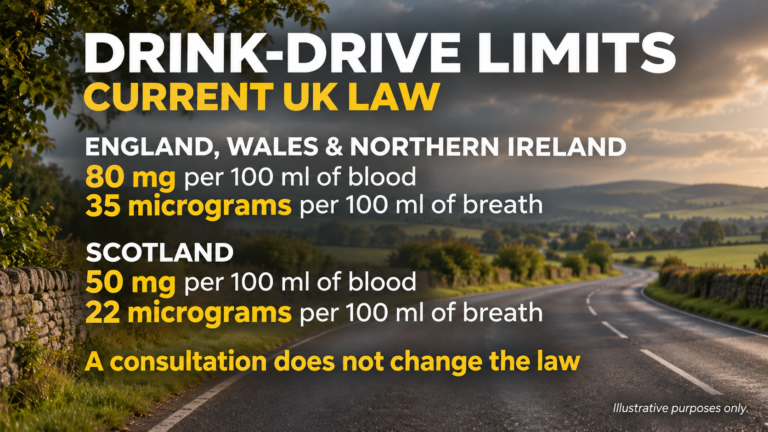 Why Crossing One Invisible Line on the A1 Slashes the Drink-Drive Limit by Nearly 40%—and What the Government’s Review Means for England and Wales
Leave a Reply
You must be logged in to post a comment.